

 Facebook
 X
X
 Pinterest
 Copy Link
Quick Answer
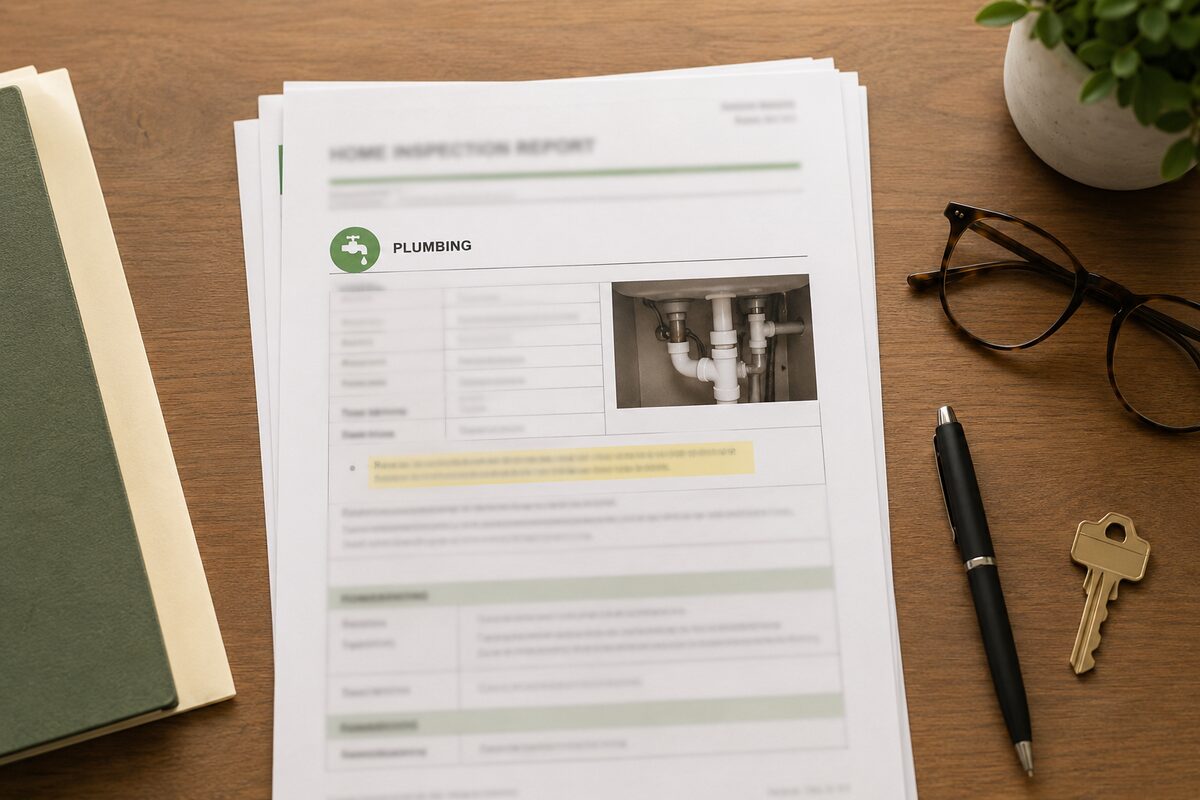
When a home inspection report recommends further evaluation by a licensed plumber, treat it as a real next step — not boilerplate. Home inspectors only observe visible, accessible plumbing, so the referral is their signal that something needs a specialist’s eyes. On older Grass Valley and Nevada City homes, follow up before your inspection contingency expires.
Buyers walk into escrow braced for bad news about the roof or the foundation. Plumbing is the last place most expect a big surprise — which is exactly why the report line that says “recommend evaluation by a licensed plumbing contractor” is the one that gets skimmed past.
Why do inspection reports refer plumbing issues to a licensed plumber?
Because the home inspector’s job ends where the visible plumbing does. Under InterNACHI’s Standards of Practice and ASHI’s equivalent, a home inspection is a visual review of accessible components — running the fixtures, checking for leaks and corrosion on exposed pipes, noting the water heater’s age and condition. Inspectors don’t open walls, dig up yards, or camera drain lines; the underground sewer lateral is explicitly outside a standard inspection’s scope per InterNACHI’s sewer scope standards.
So when an inspector sees corrosion on a galvanized supply line, slow drains at multiple fixtures, or staining that suggests a past leak, the honest professional move is a referral: have a licensed plumber confirm what this is. The inspector saw the symptom. The plumber diagnoses the cause.
Is that referral just boilerplate?
Sometimes it reads that way — inspection reports are long, cautious documents, and “recommend further evaluation” appears on many pages. Here’s the distinction worth making: a general recommendation in the report’s standard language is background; a referral attached to a specific observation (corroded pipe, slow drainage, water heater at end of life, evidence of past leaks) is the inspector telling you they saw something they can’t fully assess.
The stakes of guessing wrong are not small. The average insurance claim for water damage and freezing runs $13,954 (Insurance Information Institute, 2018–2022 data) — and insurance covers the damage, not the aging pipe that caused it.
Why does this matter more with older Grass Valley and Nevada City homes?
Because the housing stock here is older than most buyers realize, and its plumbing was updated in pieces. The median Nevada County home was built in 1983, and in Nevada City roughly one in eight homes predates 1940 (U.S. Census Bureau, American Community Survey). Gold Rush–era and mid-century houses here have passed through many owners, each remodeling to the plumbing code of their decade. Get a feel for the area in our local guide to living in Grass Valley.
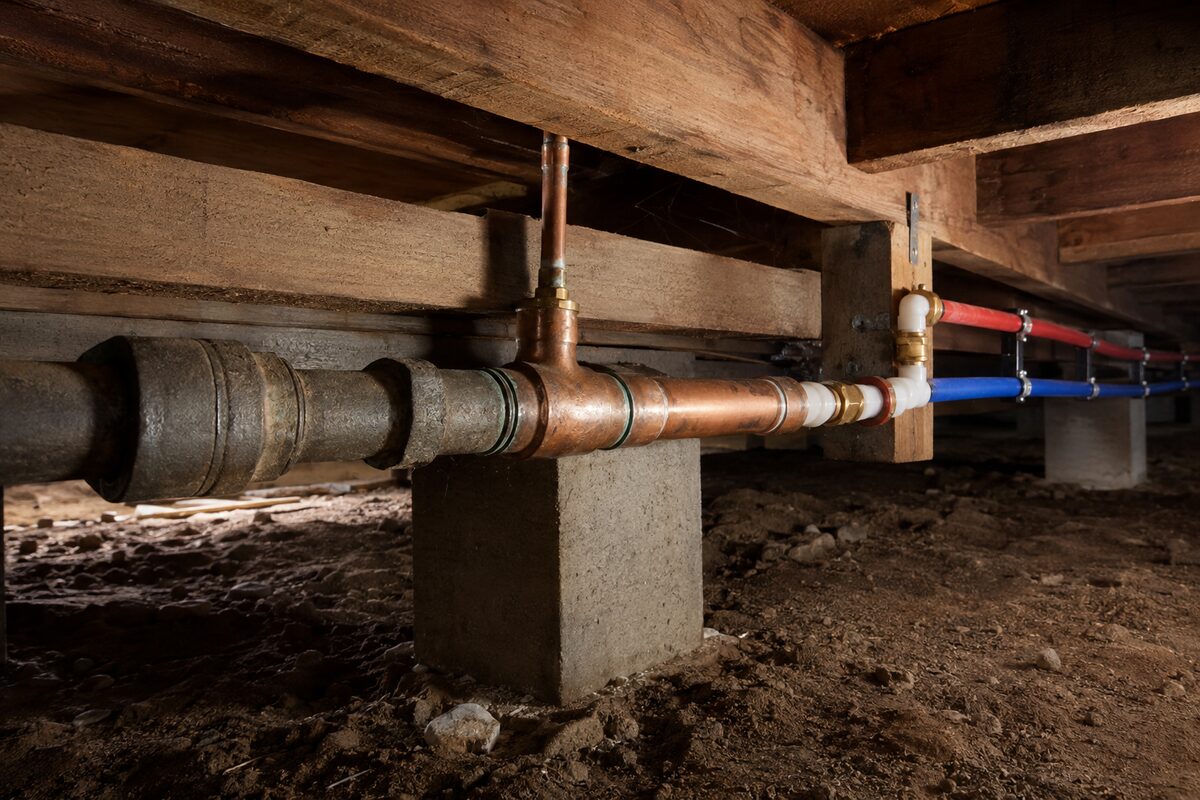
“In homes around Grass Valley and Nevada City, it’s common to open a crawlspace and find three generations of pipe — original galvanized feeding newer copper, patched with PEX,” says Keether Merry, owner of Principled Plumbing in Grass Valley, CA. “The house works fine at the walkthrough. The question is which section is next in line to fail.”
That’s the kind of condition a home inspector can glimpse but can’t grade — and precisely the situation the referral exists for.
What happens when a plumber investigates a flagged issue?
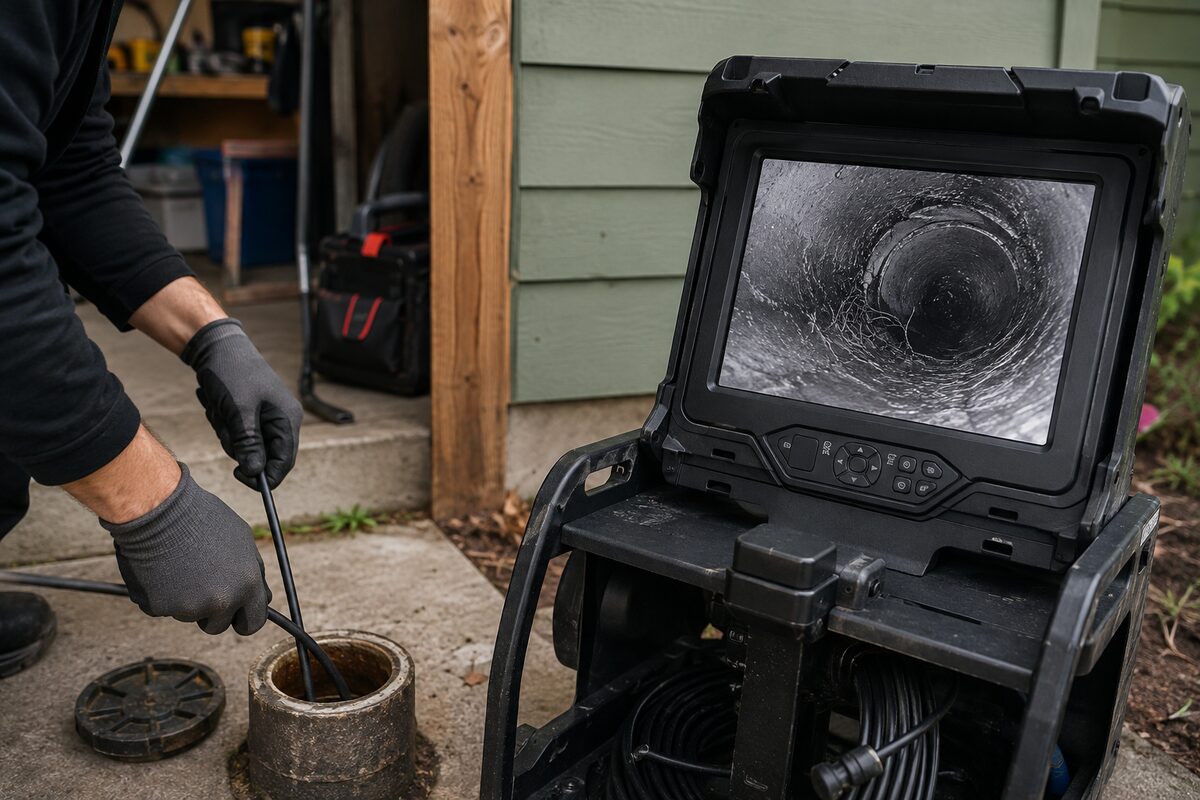
The follow-up is usually fast and inexpensive relative to what it rules in or out. A plumber can identify pipe materials and remaining life, pressure-test the system, pull the water heater’s history, and — if drains were flagged — run a camera down the sewer lateral:
| What the inspector flagged | What the plumber does | Cost to find out | Cost if it’s real |
|---|---|---|---|
| Slow drains, gurgling, past backups | Camera scope of the sewer lateral | $175–$250 for a shorter line with an accessible cleanout (Angi, updated Jul 2026) | Replacement averages $3,319, can exceed $10,000 (Angi, 2026) |
| Corroded or mixed supply piping | Material ID, pressure test, condition assessment | ~$300 average, $100–$500 range depending on scope (Angi, updated Jul 2026) | Partial-to-full repipe runs into five figures |
| Water heater age/condition noted | Age, sediment, anode, and valve check | Typically part of the same visit | Replacement cost, plus leak damage if it fails first |
“On anything built before the 1970s around here, if the report flags the drains, I tell buyers to scope the lateral before they waive contingencies,” Keether Merry says. “Five minutes of camera footage settles what no walkthrough can.”
Choose someone who works on older local homes — a licensed plumber in Grass Valley sees failure patterns in a 1935 Nevada City Victorian that don’t exist in a 1999 Alta Sierra build.
How do you handle a plumbing referral inside your contingency window?
Move quickly — the inspection contingency is the only period where what the plumber finds is negotiating leverage instead of your bill. A workable sequence:
- Book the plumber within a day or two of receiving the report; contingency windows are short.
- Give them the report pages for the flagged items, not just an address.
- Ask for written findings with a repair estimate — that’s what your agent negotiates with.
- Then decide with real numbers: request repairs, ask for a credit, or walk away informed.
California sellers must disclose known problems on the Transfer Disclosure Statement, but disclosures only cover what the seller knows. In a house that’s had ten owners, nobody alive may know what’s behind the walls.
FAQ
Do I need to act on every “recommend further evaluation” line in the report?
No — triage by specificity. A referral tied to a concrete observation (corroded pipe, slow drains, past leak evidence) deserves follow-up; generic cautionary language is context. When in doubt, ask your inspector which items they’d chase if they were buying the house.
Do sellers have to fix plumbing problems the follow-up finds?
No. California sales are typically as-is; findings give you the right to negotiate repairs, request credits, or cancel within your contingency period. What sellers must do is disclose problems they know about.
How much does the plumber’s follow-up visit cost?
A plumbing evaluation typically runs $100 to $500 depending on scope (visual, camera, or combination), averaging around $300; a sewer camera scope for a shorter, easily accessible line runs roughly $175 to $250 (Angi, updated Jul 2026). Small numbers against the five-figure repairs they rule in or out.
Which pipe materials should make a buyer pay extra attention?
Galvanized steel (corrodes shut from the inside), lead (pre-1986 health hazard), and polybutylene (1970s–90s gray plastic prone to sudden failure). Mixed materials from piecemeal remodels — common in Nevada County — mean the oldest section sets the risk.
Is a sewer scope worth it if the report didn’t flag the drains?
On older homes or lots with mature trees between the house and the street, many local buyers scope anyway — roots don’t wait for symptoms. On a newer home with a clear yard and a clean report, it’s a judgment call.
An old Grass Valley or Nevada City home isn’t a reason to walk — it’s a reason to read the inspection report closely. When your inspector points at the plumbing and says “have a professional confirm this,” that’s not the report covering itself. That’s the one line telling you where the surprise might be.
Have Questions About a Home You’re Considering?
I help buyers look beyond the walkthrough so they can make better decisions with fewer surprises. Get in touch if you’re weighing an older home in Grass Valley or Nevada City, or browse more buying and selling tips.
Plumbing insights courtesy of Keether Merry, an 18-year plumber and owner of Principled Plumbing Inc. in Grass Valley, CA — (530) 264-0464.
